
SEO Basics: What it is & How to Make Your Website Appear in Search Results

Have you heard the acronym SEO and wondered if it’s relevant to your business? If you have a website, a Google Business Profile, or social media accounts, the answer is yes!
SEO stands for Search Engine Optimization. It refers to the ongoing updates you make so that it’s easier for people to find your business online.
Search is evolving; while Google is still the primary search engine, many results now include highlighted summaries and map listings before traditional website links. Strong SEO helps ensure your business appears clearly and accurately in these results.
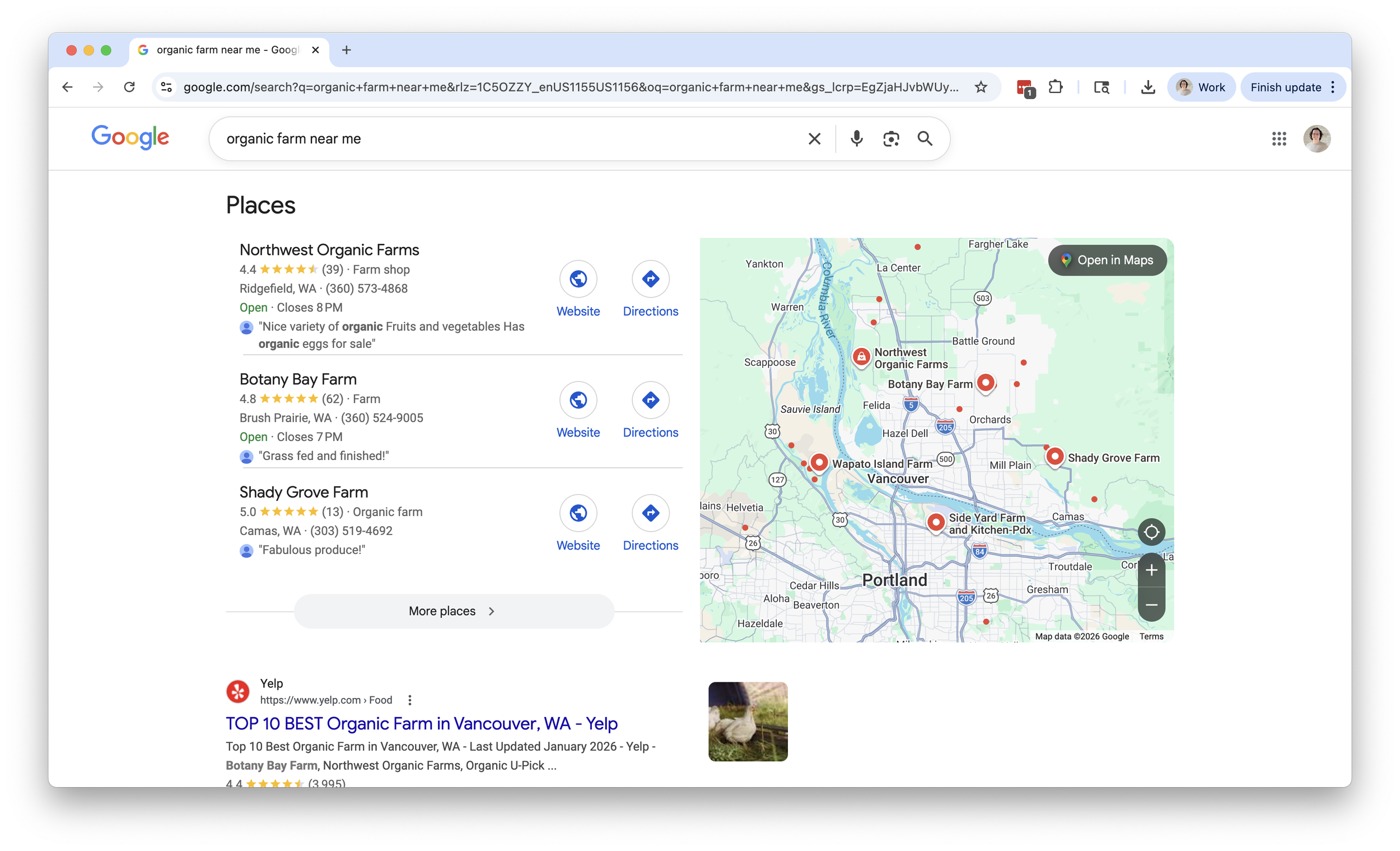
Example of a Google search results page showing map listings and local business results above traditional website links.
When done well, SEO helps your ideal customers find you at the exact moment they are looking.
Why Is SEO Important?
SEO is important because without it, customers might not know you exist. People search the internet every day to find solutions to problems like:
Your neighbor wants fresh local vegetables and types “organic farm near me”
A friend visiting town wants to find sushi restaurants
A local brewery needs marketing help for a new craft beer release
Making sure your business shows up when people search for these things is how you grow your customer base and expand your business. If you’re curious about how Google evaluates and ranks content, Google’s own SEO Starter Guide offers a clear, beginner-friendly overview.

Looking for something tangible to help you improve SEO? Take a look at our Local SEO Workbook digital download!
How To Improve SEO On Your Website
Most website platforms come with simple SEO settings, but you can boost your visibility by doing a bit more research and customization. Here are practical strategies that help your website get found online.
Do Keyword Research
Keywords are the words and phrases your customers use when searching for a business like yours.
For example, someone might search:
“CSA near me”
“grass-fed beef in Alpena”
“organic farm Kent County”
Your goal is to understand what your customers are actually typing into search engines, not just what you call your products or services.
How to do Keyword Research
First, make a list of words and phrases you think your customers might use to find your business. Then, use a keyword tool to check:
Monthly search volume, which shows how often people search for that phrase.
Keyword difficulty, which gives you an idea of how competitive it is. A high number means it’s a common keyword, making a high ranking more challenging.
After researching all of the words from your brainstorm, narrow your list to the keywords that have steady search volume and moderate or low competition.
Put Your Keywords to Work
Once you’ve identified strong keywords with good search volume and manageable competition, the next step is to incorporate them into your website. Here’s where to use them:
Page Titles & Meta Descriptions
SEO titles and descriptions are often the first things potential customers see when your website appears in search results. They help search engines understand what your page is about and help people decide whether to click.
Taking a few minutes to customize them can make a meaningful difference. Here are a few tips:
Include your primary keyword in the page title.
Add your location if you serve a specific area.
Keep titles clear and descriptive rather than clever.
Aim to keep titles around 50-60 characters so they display fully in search results.
Write descriptions that explain how your business can help solve a problem.
Summarize the page in a way that includes the keyword and encourages clicks. Think of this as your elevator pitch for the page.
For example:
Title: Name of Farm | Organic Produce in Kent County
Description: Fresh organic vegetables, pasture-raised meats, and local honey available at our Kent County farm stand.
You can use a vertical bar “|” to break up titles and keep them organized. Strong titles and descriptions help your website stand out in search results and encourage more people to click.
Headings
Use keywords naturally in your main page headline and section headers. These are called H1s and H2s and create a hierarchy for search engines to better understand your content.
Body Copy
Write helpful, clear content that answers the questions someone searching that phrase would have. Avoid using too many keywords and focus on clarity and usefulness.
Image Alt Text
Describe images using relevant phrases when appropriate (especially for product or location-based searches).
URLs
Keep them clean, consistently structured, and keyword-aligned.
For example: /northern-michigan-raw-honey
It’s often helpful to focus on more specific phrases instead of broad ones. For example, “local honey in Northern Michigan” is more specific and often easier to rank for than simply “honey.”
Keep reading for links to keyword tools that can help you get started!
Focus On Quality Content & Providing Value
Adding keywords to your website is important, but it’s not enough on its own. Search engines prioritize content that is helpful, clear, and relevant to real people.
Quality content means information that is accurate, useful, and written with your audience in mind.
Here are a few tips:
Make sure each page includes enough helpful information to serve a clear purpose. If a page only has a sentence or two, consider combining it with a related page.
Clearly explain what you offer, who it’s for, and how someone can take the next step.
Answer common questions your customers might have.
Avoid adding keywords that are not directly related to your business. Including unrelated information can confuse both search engines and potential customers.
Instead of asking, “Did I use the right keywords?” try asking, “Does this page clearly help someone understand or choose my business?”
When your website provides real value, it is more likely to appear in search results.
Prefer to listen to learn about SEO? Check out our free webinar: SEO Basics for Farms
Strengthen Your Local Presence
Most of our clients serve a specific region, and for food and farm businesses, local visibility is essential.
Make sure you:
Keep your Google Business Profile complete and up to date.
Use consistent business name, address, and phone information across your website and listings.
Add real photos and respond to customer reviews.
Include your city or region naturally throughout your website.
Many people search using phrases like “near me” or by including a town or county name. Clear location information helps your business appear in these results.
Make Sure Your Website Works Well
In addition to strong content and keywords, your website should load quickly and function smoothly on mobile devices. Many people search from their phones, so a slow or difficult-to-use site can hurt your visibility.
Best SEO Tools For Small Businesses
There are many SEO tools available, but the following are especially helpful for small food and farm businesses.
FREE DOWNLOAD: 8 SEO Tips You Can Implement Today to Reach New Customers
This guide from Mailchimp covers 12 free keyword tools.
Semrush is a powerful tool for those who are interested in more advanced SEO analysis. They have an option for a free account!
Google Search Console is a free tool that shows you which search terms bring people to your website.
Google Analytics helps you understand how visitors use your website and which pages perform best.
Google Business Profile is essential for local businesses and helps you appear in map results and local searches.
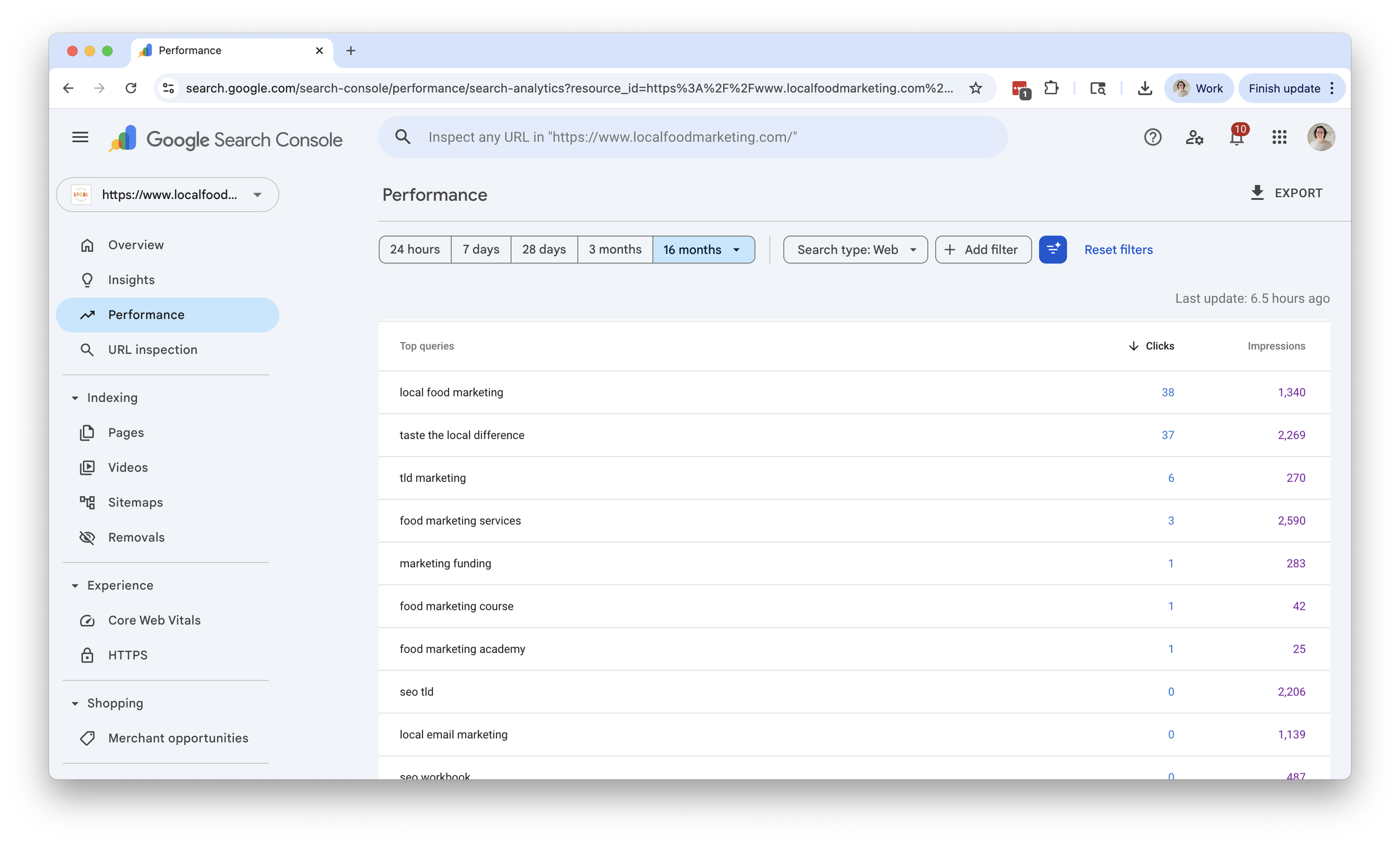
Example of performance data inside Google Search Console showing search queries and traffic trends.
Interested In Affordable SEO Services For Small Businesses?
In addition to our free resources, TLD offers customized SEO services for food and farm businesses. We provide website audits, strategic recommendations, and hands-on implementation support. For businesses that want continued growth, we also offer digital marketing retainers to maintain and strengthen search visibility over time.